Showing posts with label etsy. Show all posts

Thursday, May 23, 2013

Making a Comeback?

The first collage sheet I re-listed on etsy this week.
Back in January I was fortunate to meet up with Jay Bergesen, Product Manager at etsy, and he asked me what would it take for me to come back to the site. I'd been one of the top 10 handmade sellers on etsy for three years, but with a new baby at home and not enough hours in the day, I'd pulled all my digital collage sheets off to my own instant download site and officially announced my "etsy graduation." So I cheekily replied to Jay that he'd have to make me the poster child for the "come back kids" or make piddix a featured seller because, honestly, I couldn't think of any reason for me to bring my collage sheets back. Even if instant downloads ever became a reality on etsy--thus removing a lot of the time constraints--I thought it would be through third-party coders, and I didn't want to have to wade through random add-on programs with additional fees of their own.

But then recently, etsy surprised me and announced they would be providing digital file delivery in-house. And what's even more interesting is that the new process is pretty amazing, especially from a customer's viewpoint. They get the files right away, they're all stored in a central location under your etsy login, and the files never expire. With more than a half-million items listed on etsy as "digital," and each file taking up to 20 MB (times five files per order, and each order is stored separately), I'm a bit nervous how quickly etsy's servers will become bogged down with all these files that never expire. But other than that all the research and testing I've done of the process has been promising.

I'm nervous about coming back. Okay, let's be honest, I feel like I'd have to eat a bit of crow since I made such an official split. But when I step back and analyze the situation, my nervousness isn't a great reason business-wise for staying away. Wasn't the whole point of my 100-day-quest to not be held back by my fears? Plus, I've really been missing the interaction and feedback I always received from my amazing customers. Just yesterday I listed a new subscription and folks are already sending me the absolute nicest welcome back emails. Feels a bit like homecoming.

Monday, September 28, 2009

How I (accidentally) Had My Best Week of Etsy Sales Ever

I LOVE reading tips for how to sell on etsy on other blogs, the etsy wiki, and especially in the Storque. Right now my favorite is etsy's Quit Your Day Job series. But at a certain point, to be honest, they all start to sound the same.

So I decided to ask in the etsy forums for some "secret" tips. Ones that were unique, special or worked really well. I included my own secret to get the ball rolling, then asked others to join in. The thread (which you can see here) includes some helpful tips from other sellers, with quite a few folks "marking" the thread to read later on.

Then etsy admin daniellexo chose the thread, which I had titled "What's your best etsy sales secret? Here's mine," to be in the etsy success newsletter. Sales started coming in within hours and continued at a high rate for several days. In the end, I had my best week of sales on etsy ever.

Plus (if that wasn't great enough), I've also been asked to host an etsy workshop at the beginning of December on How to Bring in Last-Minute Holiday Sales, which is quite exciting as well.

I admit that my accidental "tip" of getting picked to be in the etsy success newsletter might be a bit of a long-shot. However, in looking through dozens of other threads that have also been highlighted, there seems to a couple of ways to increase your chances of being chosen:

1. Keep all of your helpful information within the body of your forum post. In other words, don't say "hey, I found some great advice which I share here..." and then link to your blog. Many consider this spammy/promotional and it is not taken as seriously.

2. Similarly, this is not the time for self-promotional links to your etsy site, twitter account, or blog. If people want to find you, they will. But again, too many links to your information can be distracting.

3. Pick a great title that both summarizes your topic but also draws people in. Here are a couple of forums threads recently featured in the etsy success newsletter:
4. Strive to have a couple hundred comments on your post. This isn't essential, but will help keep your post toward the top of the forums, and thus more likely to be seen by an etsy admin. You can do this by promoting it outside of etsy (I announced it in my newsletter and twitter). You can also bump your thread up by being an active participant when people ask questions or are looking for follow up.

5. And perhaps it goes without saying that helpful information should be, well, helpful. Spend some time writing up your post. Spell check. Use paragraph breaks. Think about a tip you have that is unique or that has served you well. I'd also suggest subscribing to the Etsy Success newsletter both to get an idea of what is typically covered, but also because there are some great tips shared.

Nope; there's no guarantee that by posting a helpful thread that you'll be picked for the newsletter. But at a minimum, sharing your helpful advice with others will hopefully result in some good karma.

Thursday, September 10, 2009

Full Time Crafting Six Months In

Two months before I "Quit My Day Job" in March 2009, piddix had its biggest sales month ever. At the time I had lunch with an etsy friend and told her my goal was to double those sales within a year, and I had enough savings to act as a safety net during the growth period. She commented that it might take the full year to reach my goal; but I inwardly scoffed that it would take that long. After-all, my sales had been climbing steadily for a while, I had taken classes, I was prepared (or so I thought)...

Then "Wham!;" I ran into four months of fairly low sales, which were both scary and depressing. To top if off, my husband was laid off from his job at the beginning of June. It was looking bleak for piddix. I immediately went to my old non-profit organization, one that I sill love and admire, to see if they had any work for me. See, they still had my old position open, and I always had it in the back of my mind that until they hired someone new, I could always go back, with hat in hand, and help out there. Fortunately for both of us (and you'll see why in a minute), they were in the middle of a hiring freeze. They could offer some contract work, which would help me pay the bills for a bit, but nothing permanent.

Rather than be sad or stressed at the news, I found myself rather relieved. At that moment I realized that I truly loved working on piddix. I loved working from home. I loved being able to scan books and play trains with Declan at the same time. Every aspect of the business--from marketing to designing new products--still fascinated me. While I had left a very nice job with wonderful people and benefits, rather than the traditional mind-numbing cubicle work that is easier to leave, I was still having more fun working for myself, on my own terms.

So I intensified my efforts with piddix (thanks Mom and Dad for the extra babysitting) and thankfully, this past August was a new record for piddix sales, and September looks good so far.

I've learned a million things in the process. The two that stand out at the moment are:

1. Know your sales trends. If I had paid much closer attention to my sales trends over the past several years, and done some additional research, I would have noticed that the February through May are traditionally a very slow time for selling supplies, since everyone has already finished up their holiday craft fairs but hasn't yet started on their summer activities. That knowledge would not only have factored into my plans of when to leave my "day" job, but also cushioned my ego, too. Now that I'm tracking the ups and downs better, I can be financially and emotionally prepared for both.

2. Try Everything. A friend of mine calls this the "shotgun approach," since I'm basically shooting a bunch of ideas out and hoping one of them will hit its mark. Or, as a member of my board of directors puts it, I'm wandering around in the dark hoping for brief moments of illumination. I may at some point write an entire post on the 243 things that I have tried in the last seven months--from the hand-letterpressed thank you cards I made to send with my packages (which are still sitting unused on my shelf), to the four different collaborations I've tried (two great, one so-so, and one still in the works). Needless to say I wouldn't suggest this for anyone else. A more surgical, practiced approach would save a bunch of time. But it actually worked well for me. Of the 243 ideas that I tried, about five worked very, very well and are responsible for my current sales record. I would never have found them without the other 238.

So, as always, wish me luck. It's been very nice to have a bit of an emotional and financial boost this past month or so. And looking forward I'm hoping that the "ups" outnumber the "downs."


Monday, July 27, 2009

How Much Money Will I Make Selling on Etsy?

Call me materialistic (or perhaps practical), but whenever I start researching a new online venture, one of the first things I want to know is "How much money will I make?" It helps me determine whether the new site -- say istock photo -- is worth some of my interest and time. And if so, what are realistic goals to set for attention spent, income potential, and growth. And frankly, I can never find the answer.

So without further ado, here are some completely reliable and some completely guessed-at etsy stats.

If you are relatively new to etsy and have a nice, but somewhat common product (such as wire-wrapped earrings) with decent but not great photographs and spend 10-15 hours per week on your shop, you annual gross income from etsy will be:

$512.72

Yep, that's all. And that's before expenses. It's less than $1 per hour, and you'd make more money weatherizing your house or cutting out an extra latte here and there.

But wait, if you instead have a somewhat unique item, with great photographs and spend more than 20 hours per week, you could make up to:

$3618.13 per year

Which really isn't too bad, but again, there are much easier ways to make money. Like having a couple of great garage sales or clipping a whole lot of coupons.

Okay, okay, but what if you get really, really lucky, have a completely amazing product, work 80-100 hours per week and become one of the top etsy sellers? Can you really Quit Your Day Job and support your whole family?

Sort of.

Last year, the top three handmade sellers on etsy each grossed around $100,000. Several supply shops probably did even better. But after that, it drops off pretty quickly, with most other sellers in the top 100 making closer to $10,000. With about 90,000 active etsy sellers (according to a recent etsy talk), your odds of making $10,000 per year are better than winning $10,000 through the PowerBall, though not by a ton.

So if you're not in it for the money, why in the world would anyone want to sell on etsy? Quite frankly, it's fun. It's a community of other creative women. It's flexible--and can be done from home, as a second "job," or while little ones nap. People will pay you for your arts and crafts, which is greatly rewarding. And even a smallish amount of additional income can sometimes make a big difference. Plus, in addition to direct income, your etsy shop can help bring recognition to your goods outside of etsy, such as wholesale accounts and blog mentions.

There's been quite a bit of talk lately about whether etsy is a "female ghetto," or promoting a false sense of hope of the ability to make a living from crafts. I find that most of these articles are filled with inaccuracies and generalizations. At the same time, I think it's important to have realistic goals of what etsy specifically can do for you. Piddix is currently #6 in sales in the handmade category, and while honestly I could make significantly more money in less time at a "day job," I wouldn't trade it in. In no way is etsy a way to get rich quick, but with way too much work and hopefully an equal amount of fun, it can definitely be a way to supplement an income by doing something you find rewarding.

Thursday, July 16, 2009

Going Up: Taking Your Craft Business to the Next Level

How to expand piddix is the main question that has been haunting me this past year. In other words, once you've reached a plateau, how can you take your business to the next level? In addition to taking a class for entrepreneurs through MercyCorpsNW and writing up a business plan, there were three main areas where I looked for my answer:

1. I asked just about anyone I could for advice (see my post on it here).

2. I read numerous books, articles, blogs, etc. about the major pitfalls and best practices for expansion. The book Profit from the Core, for example, really hammered home the idea that businesses who spread themselves too thin--who take on too many new ventures outside of their normal focus--most often fail. (Though the book, written in 2001, did question amazon's "new" strategy of selling more than just books. So obviously new ventures can definitely pay off if done well.)

3. And finally, I did a SWOT analysis, which proved to be very helpful in analyzing the strengths and weaknesses of myself and my competitors.

SWOT -- Strengths, Weaknesses, Opportunities, Threats

My simplified version of the standard SWOT analysis essentially compared piddix to my competitors, look at my business assets, and tried to come up with a way to address my weak areas. It went something like this:

Strengths: My images are legal and a very high quality.
Action: When several competitors came on the market a while back with illegal, cheaper, and lower quality images, I wrote a blog post about how I research copyright. I also changed my shop announcement and item listings to reflect my research and restoration process. This seems to have worked well.

Weaknesses: I'm a slow designer. I take a very long time to research copyright and restore images. I'm also darn stubborn.
Action: I took several graphic design classes and learned a new software to be able to make the collage sheets more quickly (and be able to respond to custom requests). That's been mixed. I've learned a ton of great new techniques, but I'm still so much slower than others. For example (and this is where my stubbornness comes in), I know that I probably should just repeat more images in each collage sheet and not worry about lining everything up perfectly, since it's the quick little happy sheets that are selling well for my competitors right now. But I am stubbornly holding onto spending hours and hours making each new sheet--little tiny tweaks sometimes that may not even be noticed. I justify this to myself by saying that my customers appreciate the high quality and that's why they come back. At the same time, though, it's tough to see others' "quick sheets" selling three times as fast. Hmmmm.

Opportunities: Even though I sell mostly smaller images in the one- to two-inch range, I have thousands of larger scans just sitting on my computer. I also have many of the original colored plates that I have removed from books, vintage postcards that I've scanned, and vintage ephemera just sitting on my shelves.
Action: I put some of my original ephemera for sale on etsy with only limited success. And I don't think my assemblage sets have sold once. I have also started an area on my instant site for as-scanned larger images as well as a commercial section. With all of these ventures, I think I would need to put more energy and time into building up these new products, but it may also pull me too far away from my "core." We'll see how these develop.

Threats: This is the scary part. Collage sheets (which are my main product) are relatively easy to create poorly. You can grab a bunch of images off of websites and fill up a store quickly. Even shops that create legal, original designs can bring hundreds of items over from an ebay store or other venue and go from newbie to top seller within a couple of months. The very precarious nature of selling on etsy, and the fact that almost all of piddix's income is based on etsy sales, is worrisome.
Action: I am slowly diversifying where I sell, adding other online venues that may add some cushion. Again, I hope this won't spread piddix too thin. And since most folks who try piddix once become repeat customers, I am working to thank and further support my repeat customers through things like my newsletter and subscription.

Wow, in the end I've put way more personal and business information into this post than I had intended. It's obviously something on my mind quite a bit. Though I sometimes worry that I'm giving too much information away to my competitors, I figure it's what you do with the information that counts. Hopefully you can create your own SWOT and see which ventures may help build up your core.

Monday, July 6, 2009

La Vie Cherie :: Using Vintage French Postcards as Photo Backdrops

Taking amazing photographs is probably the single best way to showcase your products. In addition to good lighting and angles, "staging" the item can make a huge difference in its presentation. A lovely trend I've noticed lately is using vintage French postcards as backgrounds for small items--especially jewelry. It not only makes the jewelry "pop," but also adds a romantic, Victorian-era feeling.

Arete has some of the most lovely photographs featuring vintage postcards, a theme which carries through her entire site--including her banner and these great shots of her jewelry and packaging below:
Chinacherie's Eiffel Tower necklace goes well with this colorful, vintage Eiffel Tower postcard.
Another Eiffel Tower postcard from 1889 adds drama to these sweet earrings by Marolsha:
Another lovely French theme in earrings (on top), and a necklace below, from nostalgems.
For some helpful tricks on photographing small items, such as jewelry, check out either this storque article or one from my website. I've searched high and low for a simple, effective light box and this one by Sugar Panda is by far my favorite. And also check out my downloadable vintage French postcards on etsy.

Wednesday, June 17, 2009

Copy Cats: Bring Them On

If you sell your products online, eventually someone will copy you. Online craft sites such as esty are especially well-known for how rampant outright copying can be.

During my years on etsy, I have had just about everything possible duplicated--including exact copies made of my profile (who copies an entire profile?) and even how I leave feedback or name my items. The quickest that someone has made a knock-off of an entire collage sheet is three hours.

At the beginning I would get pretty upset. Last year I must sheepishly admit I even sent the seller of the "October special" below (mine's on the left; hers on right) a snarky little convo saying that she hadn't quite gotten the copy right and that I would gladly send over the names of the fonts I had used if it would help.
(She no longer sells on etsy and her name is not attached, which is why I include this as my only example from someone else).

Recently though, two things happened that made me much more zen about the entire process. First, I came across a listing for someone else's butterfly ephemera collage sheet described as "a new take on a popular theme." You see, several years ago I created some sheets with vintage butterflies on postcards (both below are mine):In 2007-2008 these were some of my most popular items. Since then, more than 200 different variations of "butterflies on ephemera" have popped up from other sellers. Seeing something that I had originally created now identified as a "trend" or theme could have been very frustrating--but I actually had to laugh. By turning the idea of copying on its head, I can see my best postings as setting trends. If I add a collage sheet of vintage keys or a new size like 2.6 inch pocket mirrors, it's become almost a game for me to see how long it takes until someone else does the same. And if something doesn't get copied--was it not good enough? Should I push my ideas further?

Secondly--and I think this is probably the most important--I realized that copying doesn't work. Remember the etsy shop with the "October Special" I mentioned above? Initially her entire shop of 100+ items were near duplicates of mine. After I contacted her she started going in an entirely new direction--making her own, original designs. And guess what? Her sales went through the roof! Shoot!

So now when someone duplicates my items--even if it's 99% the same--I say nothing for very practical, business reasons. A shop full of knock-offs of other people's work has no creativity of their own and etsy buyers can sense that. Sure, they'll get a couple of sales, but the best shops constantly push themselves, always being innovative and trying to stay ahead with new ideas and new products. That in the end is what will pay off.

So when something you create is full-on copied, and responses such as "imitation is the sincerest form of flattery" and "who knows who really came up with the idea first?" seem flat--remember that at the end of the day your creativity has inspired others and that is what pays off in sales and customers who are looking for innovation. Push yourself further and don't worry about looking behind to see who is chasing you.

Friday, April 3, 2009

Using Collaboration to Widen Your Market and Increase Sales

Collaborating with a fellow etsy seller can be a very effective way to diversify your market and product line. I've had a full range of partnerships including one very effective scrabble tile tutorial with littleputbooks that increased my sales by 30% last summer, a collage sheet with beautiful photos by doubleyouEm that sadly went nowhere, a glass pendant tutorial launched today with AnnieHowes, and a super-secret one in the works with one of the top sellers on etsy. But where do you start? Read on for my step-by-step tips on how to make it work for you.
Glass pendant tutorial by Annie Howes with images by piddix
Finding Your Partner
Some of the most natural combinations involve shops with similar styles but different products. This could be licensing an artist's image to make into mousepads or pendants, or commissioning embroidered custom bags for your dog treats. Perhaps one shop makes scarves to match another's earrings. What makes these stand out as collaborations is first, there was an intentional discussion between two makers of how to create the final product. And second, each shop promotes the other through the item description.
Monkey Coasters by MirrorGirl with Art by Matthew Porter
When looking for someone to partner with, think about what you make and what would go well with it (like Chocolate and Peanut Butter, as Annie Howes says). Avoid a shop with items that are too similar. Two journal makers, for example, would simply be promoting to the same audience. But one person who makes handmade paper and another who fashions journals might be perfect together. Look for a shop with a similar theme or style to make sure that the customers of one shop will be interested in the items of the other. Also, since your reputation will in some ways be tied together, check out their feedback and number of items sold before contacting them.
Ryan Berkley illustrations on TinyMeat wallets.
There's even some shops, such as TinyMeat, that have an entire process for how to submit your custom images.

Tips for First Contact
Once you've come up with some ideas, make a prioritized list of potential collaborators. Starting at the top, send a convo that lays out your idea, how it might work, and links to your blog, shop, or articles. The more detailed your proposal, the more seriously the person may take you. But also be sure to allow or flexibility. After all, this is a partnership, and some of the best ideas may come down the road as you plan together. If you haven't heard back in a week, send a polite "just checking in," then move on to number two a few days later.
Mouse pad by MyFavoriteMirror with image from TheBlackApple.
Get it in Writing
Now that you've started a dialogue, the fun part starts. Open communication is key to your success, so be sure to discuss all of the details and specifics up-front such as:
  • Payment
  • Link trading and other cross-promotions
  • Setting a time limit
  • Exclusivity
And if you've discussed your details over the phone or coffee, it's best to confirm them all in writing via convo or email. Then if something comes up later you'll have a record of what you've agreed upon.
Scrabble pendant by Home Studio with image from JOYPOPstudio.
Payment
There's many different ways to go about this. You may buy the rights to an image or a custom supply with payment upfront. Perhaps you agree on a percentage basis or dollar amount per sale (say, $1 per pendant or wallet). Or even offering the same items in both shops, with each person responsible for their own order fulfillment, such as these lovely pendants from Irene Suchocki and Heartworks by Lori.
Cross Promotions
Cross promotion can include links or mentions in item listings, item names, shop announcements, newsletters, blogs, tags on the item itself, and so on--so it's best to be as specific as possible about what each person expects. For me, I've found I get the best exposure from being in another person's shop announcement. Something simple like "check out my new collaboration with piddix here...." can send hundreds of views to my shop. I ask for a minimum of two months where we both link back to each others shops, with a possible extention if all goes well, plus my shop name in the item title and a link in the description. Keep in mind the possible ramifications of wholesaling as well. For example if your customized doll clothes will be sold on handmade dolls in brick and mortar shops, consider asking for a link to your shop on the hang tag.
Dark Hamlet necklace by JenniferRydinDesigns with image by Immortal Longings.
A Few Last Tips
Other items to consider include whether you'd want to set a time limit on your collaboration, or at minimum a set time down the road (three to six months) where you officially reevaluate the relationship to make sure it's working for both of you. Also think about how hands-on you want to be. Do you want to evaluate every posted item that you collaborate on before it goes live? And finally think about exclusivity. If you hand dye slips that another artist then silkscreens, do you want them to work with other clothing sellers as well? What about other fabric collaborations? Would you work with other silk screeners? There's no right answers to these questions, but it's helpful to be as upfront as possible to avoid bruised feelings down the road.

Tutorial and pendant by AnnieHowes.
Above all remember that collaboration is not only be a way to increase sales or make some extra money. It should also be creative and fun as you bounce ideas and techniques off of other crafters and come up with something that neither of you could have created on your own.
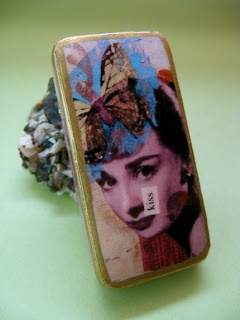
Kiss magnet by RunAliceRun with image from CindyG.

Thursday, March 12, 2009

So I Quit My "Day" Job

Today is my first official day as a full-time, work-from-home crafter. When I tell people I left my nice, non-profit, part-time job (with benefits) in this economy, most people seem to think I'm a smidge brave and mostly insane. If you've read the etsy Storque article on piddix, you know that I've been trying to balance two 30-hour-a-week jobs plus be home with my son four days per week. It had finally reached the point where something had to give.

Over the past two years piddix has grown from a hobby to a real, grown-up business with Quickbooks and all. Designer AshleyG has said about her amazing etsy shop "our time is directly proportional to our income." During the next 30 days I'll be sharing different tips that I've learned along the way, plus try to answer the question of whether, by putting more time, energy, and resources into my crafting business it can take off and thrive.

Wish me luck.